
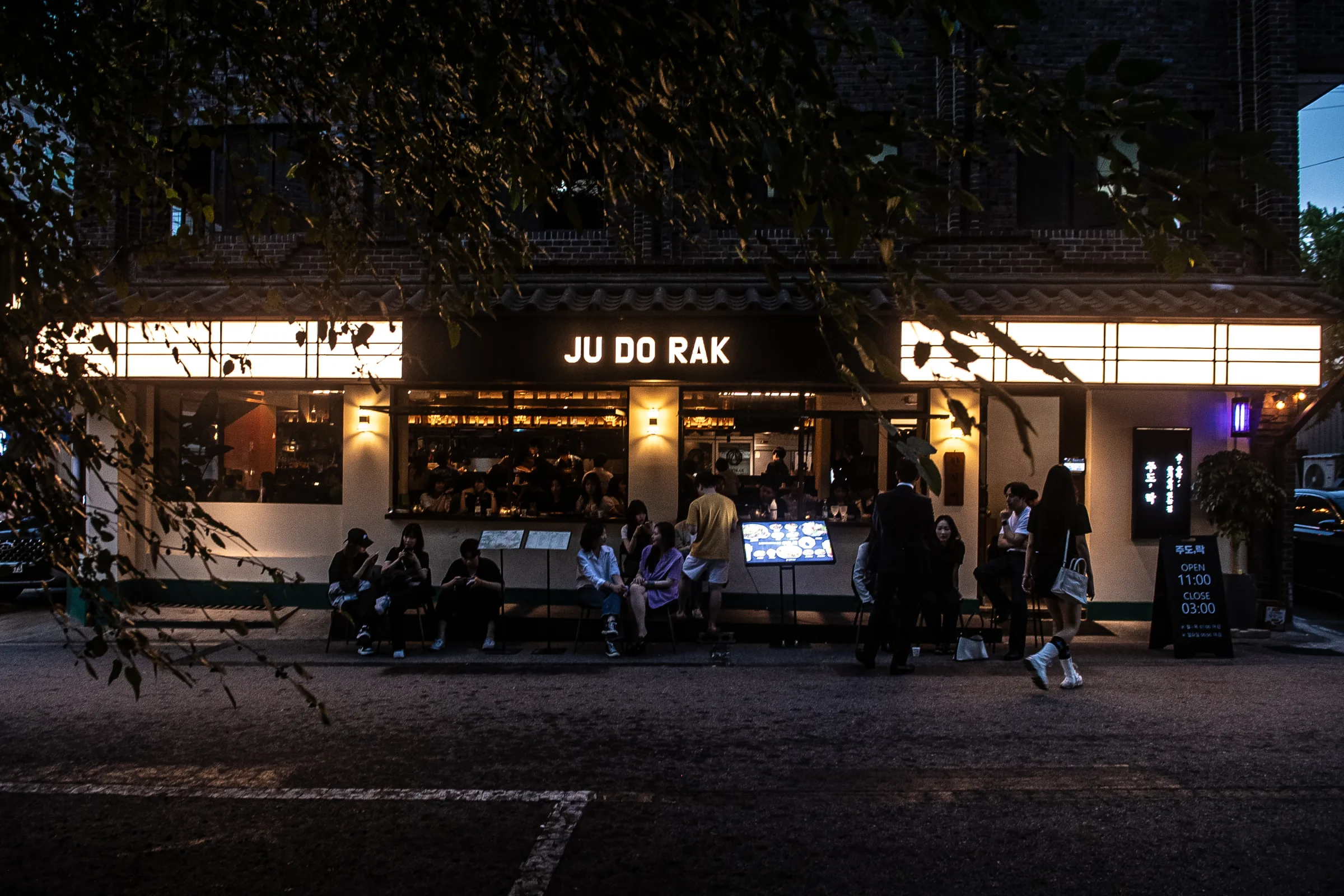
Yes. Judorak Euljiro’s daechang tteokbokki combines plump daechang (beef large intestine), garaetteok (cylindrical rice cake) and a spicy house sauce. Rather than expecting familiar tteokbokki built mainly around rice cake and fish cake, think of this as a dish for sharing in which daechang is one of the main ingredients.
It may suit you if you want the richness of daechang together with the bite of garaetteok. If you avoid organ meat or are sensitive to spicy food, check another dish first.
Judorak’s daechang tteokbokki is described with three components
| What to check | What the official menu confirms |
|---|---|
| Does it contain daechang? | It specifically lists plump daechang |
| What kind of tteok is used? | It specifically lists garaetteok |
| What is the sauce like? | A spicy house sauce |
| Is it marked as lunch-only? | It appears without a separate lunch-only label |
The absence of a lunch-only label does not guarantee that the dish is available throughout every service. If this is the reason for your visit, check its availability that day in case it is sold out or the menu has changed.
Daechang is the clearest difference from familiar tteokbokki
Tteokbokki varies by restaurant in its rice cake, sauce and added ingredients, so there is no single standard plate for comparison. What the Judorak menu clearly confirms is daechang. It appears in both the dish name and the published description.
That can be a reason to choose it if you enjoy the distinctive richness of organ meat. It may not suit guests who expect a dish focused only on tteok or who avoid beef intestine. If someone in your group does not eat daechang, decide whether this is an appropriate dish to share before ordering.
The tteok is garaetteok and the sauce is spicy
The official description identifies the tteok as garaetteok, a cylindrical rice cake. It does not publish the exact formulation, size or number of pieces served on one plate.
The sauce is described as a spicy house sauce. No heat scale or specific source of heat is listed, so the public information does not support a numerical heat rating. If you are sensitive to spice, ask the staff about the current preparation before ordering.
Choose another dish with a different role on the table
After choosing daechang tteokbokki, you can look for another format such as a pancake, noodles or a separate beef dish.
- For a Korean pancake: cheese shredded-potato pancake or Korean wild herb (chamnamul) and shrimp pancake
- For noodles: yuzu kal-bibim noodles or perilla-oil makguksu
- For a separate beef dish: beef yukjeon or hanwoo beef tartare
This list does not guarantee that those dishes are mild or free of a particular allergen. Confirm the heat and ingredients of each item separately. The published components of the noodles are explained in our guide to Judorak’s perilla-oil makguksu.
Heat adjustments and serving the sauce separately require confirmation
The official description says the spicy sauce is poured over the dish, but it does not say whether the sauce can be served separately or whether its amount or heat can be changed. Ask before ordering if the ingredients in the daechang, sauce or tteok, or a possible allergen, matter to you.
Check the latest listing on CATCH TABLE. For visitor information and restaurant enquiries, use the Judorak Euljiro visitor guide.
Does daechang tteokbokki really contain daechang?
Yes. The current official menu specifically lists plump daechang, which is beef large intestine. If you avoid organ meat, choose another dish.
What kind of tteok is used in daechang tteokbokki?
The official description identifies garaetteok, a cylindrical rice cake. Its exact formulation and the number of pieces on one plate are not public, so ask the restaurant if you need those details.
Can I ask for less heat in the daechang tteokbokki?
The menu does not publish a heat scale or say whether adjustments are available. If you need the dish to be milder, ask whether a change is possible before ordering.